
Toronto’s brick streetscapes owe their character to durable materials and conscientious maintenance. Yet the lake-influenced climate, marked by frequent freeze-thaw cycles, wind-driven rain, and seasonal humidity, can quickly turn minor masonry issues into costly failures. This article outlines practical steps for assessing brick façades and chimneys, managing moisture, and scheduling repairs for long-term performance.
How Brick and Mortar Age
Brick provides compressive strength while mortar joints act as cushions, distribute loads, and shed water when properly tooled. Over time, ultraviolet exposure, salts, and thermal expansion erode the fines in mortar, leading to recession and micro-cracking. Once joints open, wind-driven rain penetrates the wall, setting up a cycle of wetting, freezing, and spalling. Establishing a regular inspection routine, especially after winter, helps identify early warning signs before they propagate.
Inspection Checklist
- Mortar joints: Look for powdering, deep recesses, and open verticals at corners, sills, and parapets.
- Brick faces: Note flaking surfaces (spalls), bulges, and “drummy” sounds that suggest delamination.
- Water pathways: Check flashing laps, drip edges, and weeps. Stained lintels or shelf angles often map to failed or missing details.
- Grade conditions: Ensure positive slope away from foundations and downspouts discharging beyond splash zones.
- Interior clues: Damp odors after rain, peeling paint near exterior walls, or localized plaster damage.
For owners planning phased maintenance and looking to benchmark practices specific to the city’s climate and materials, resources under toronto masonry are useful for understanding regional detailing and repair sequencing.
Prioritizing Repairs
Most durable scopes follow a water-first logic: stop active leaks, then restore the assembly. A typical sequence includes:
- Detail rehabilitation: Rebuild through-wall flashing at shelf angles and sills. Add end dams and visible drip edges. Reopen blocked weeps.
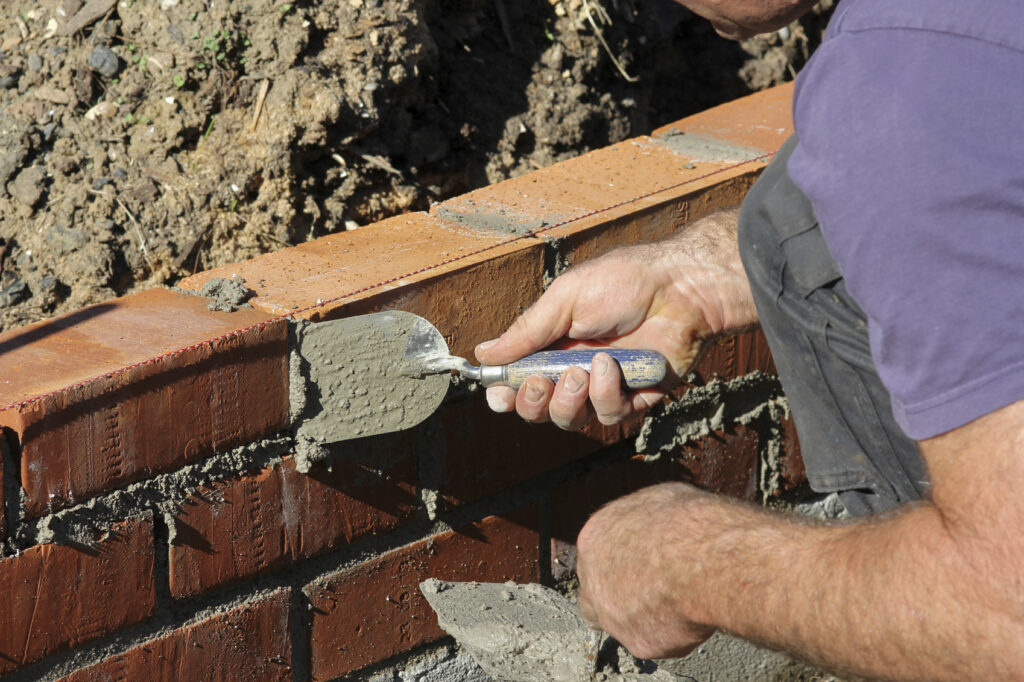
- Compatible repointing: Cut out deteriorated mortar to sound depth. Match sand color, gradation, and compressive strength so joints serve as the sacrificial element instead of the brick.
- Selective brick replacement: Replace spalled or fractured units with size and absorption matches to keep hygrothermal behavior uniform.
- Drainage and grade: Extend downspouts, correct negative slopes, and renew eroded parging at grade where splashback concentrates wetting.
Chimneys: Highest Exposure
Chimney stacks sit above the roofline where exposure is most severe. Typical failures include cracked crowns, flat tops without drip edges, missing caps, open joints, and failed step or counter flashing at the roof interface. Effective remediation treats the entire assembly: crown reconstruction with slope and drips, proper cap sizing and screens, repointing with compatible mortar, selective unit replacement, and re-layered flashing integrated with roofing. For scope outlines and inspection priorities, see references covering chimney repair.
Breathable vs. Film-Forming Treatments
Surface sealers cannot substitute for missing flashing or open joints. Where specified after water entry issues are resolved, silane or siloxane repellents can reduce absorption while allowing vapor to escape. Film-forming coatings may trap moisture, particularly on soft or historic brick, and can accelerate freeze-thaw damage.
Seasonal Strategy for Toronto
Spring: Document new cracks, spalls, and efflorescence after thaw. Schedule detail and joint repairs.
Summer: Execute repointing and unit replacement for best curing conditions. Rebuild crowns and flashing.
Fall: Clear gutters and weeps. Verify cap screens and drip edges before winter wetting intensifies.
Winter: Avoid heavy exterior work. Plan diagnostics and material matching for spring.
Key Takeaways
- Moisture management through flashing, weeps, and grading drives durability more than any coating or sealant.
- Compatible repointing preserves bricks by letting joints, not units, absorb movement and weathering.
- Chimneys merit early attention due to extreme exposure and safety implications.
- A photo log of seasonal inspections streamlines future matching, budgeting, and tendering.